
Herniated or Bulging Disc? Non-Surgical Care Options in Kalamazoo
Hearing the words "herniated disc" can be scary. Maybe an MRI report mentioned a bulge, or a doctor said a disc might explain the pain running down your leg or into your arm. It's natural to wonder whether surgery is the only answer.
For most people, it isn't. Many disc problems calm down over weeks to months with conservative, non-surgical care. In this guide we'll explain what a herniated or bulging disc is, common symptoms, how long healing usually takes, and how chiropractic adjustments, massage therapy, and spinal decompression may fit into a plan to help you feel and move better.
What Is a Herniated Disc?
Between the bones of your spine (the vertebrae) sit soft, rubbery discs. Each disc has a tougher outer ring and a softer, gel-like center. Discs act like shock absorbers and help your spine bend and twist.
A herniated disc happens when some of that inner material pushes through a weak spot or tear in the outer ring. You may also hear it called a slipped disc or ruptured disc. Herniations are most common in the lower back (lumbar spine) and the neck (cervical spine).
Herniated disc vs. bulging disc
These terms get mixed up a lot:
- A bulging disc spreads outward a bit beyond its normal edge, a little like a tire that is low on air. The outer ring is still intact.
- A herniated disc has a tear in the outer ring that lets some of the inner material push out.
Here's something that surprises many people: disc bulges and even herniations often show up on MRIs of people who have no pain at all, and they become more common with age. A finding on an image doesn't always explain your symptoms. That's why a hands-on exam that connects what you feel to what's going on matters so much.
Common Herniated Disc Symptoms
Symptoms depend on where the disc is and whether it's irritating a nearby nerve.
Herniated disc lower back symptoms
- Low back pain, sometimes sharp with bending, sitting, coughing, or sneezing
- Pain that travels into the buttock, thigh, or below the knee, often on one side (commonly called sciatica)
- Numbness, tingling, or a "pins and needles" feeling in the leg or foot
- Muscle weakness in the leg or foot
Herniated disc in the neck symptoms
- Neck pain and stiffness
- Pain spreading into the shoulder blade, shoulder, or down the arm
- Numbness or tingling in the arm, hand, or fingers
- Weakness in the grip or arm
Some people have only back or neck pain. Others mostly feel it in the leg or arm. And some people with a disc problem have very mild symptoms or none at all.
How Long Does a Herniated Disc Take to Heal?
Every case is different, but the general picture is encouraging. Many people with a herniated disc notice real improvement within about six weeks to three months with conservative care. The body can often reabsorb some of the herniated material over time, and inflammation around the nerve settles down.
Some people take longer, and some have flare-ups along the way. Staying gently active, avoiding movements that clearly aggravate your symptoms, and following a consistent plan tend to help the most. If you're not improving as expected, it's worth checking in with your provider about other options.
What Helps at Home
While you're healing, these steps help many people:
- Stay gently active. Long bed rest usually doesn't help. Short walks at a comfortable pace are often a good start.
- Take breaks from sitting. Sitting can increase pressure on lower back discs. Get up and move every 30 to 45 minutes.
- Find comfortable positions. Lying on your back with your knees bent, or on your side with a pillow between your knees, may ease pressure.
- Lift carefully. Bend at your hips and knees, keep the load close, and avoid twisting while you lift.
- Use heat or ice for 15 to 20 minutes at a time, whichever feels better to you.
- Ask your doctor or pharmacist whether short-term over-the-counter pain relief is safe for you.
Herniated Disc Treatment Without Surgery: How We May Help
Surgery is sometimes the right call, but most people with a herniated disc never need it. Non-surgical care aims to calm irritated nerves, restore comfortable movement, and help you get back to normal activity. At Soldano Family Chiropractic Center, we start by finding out whether your symptoms really are coming from a disc and whether our care is a good fit for you.
Your first visit
- A conversation about your symptoms, when they started, what makes them better or worse, and any imaging you've already had
- An exam of your posture, spinal movement, strength, reflexes, and sensation
- Screening to see whether you need a medical referral or imaging before care begins
- A clear plan with goals you agree on and an honest idea of what to expect
Spinal decompression
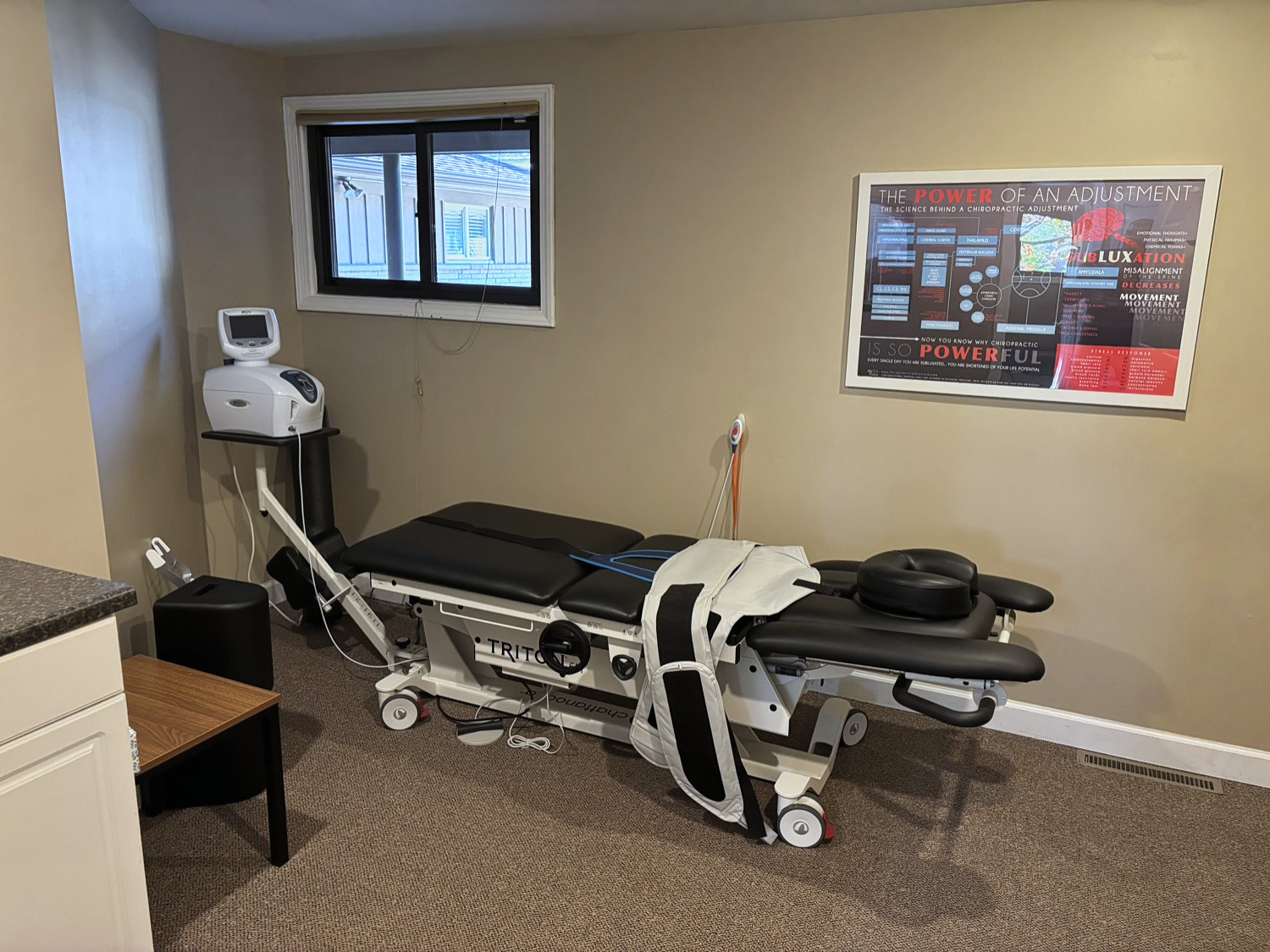
Spinal decompression is a non-surgical therapy in which you lie comfortably on a specialized table while it applies gentle, controlled stretching to the spine. The goal is to reduce pressure on irritated discs and nerves. Many patients find it relaxing.
We want to be honest about the research: studies on decompression are limited and the results are mixed. Some small trials show benefit for disc-related back and leg pain, while others found it no better than standard traction. We'll only recommend it if your exam suggests it's a reasonable option for you, and we'll track your progress so you know whether it's helping. You can learn more in our article on spinal decompression in Kalamazoo and Portage.
Chiropractic adjustments
Stiff joints above and below an irritated disc can add to pain and limit movement. Chiropractic adjustments are controlled, hands-on movements that aim to restore motion to those joints. With a disc problem, your chiropractor will choose techniques carefully, and gentle, low-force options are available. Care is always adjusted to what your body tolerates.
Massage therapy
When a disc is irritated, the muscles around it often tighten up to guard the area. That guarding can become its own source of pain. Massage therapy may ease muscle tension in the back, hips, neck, and shoulders, improve comfort, and make it easier to stay active and keep up with your exercises.
Exercise and daily habits
Hands-on care works best alongside movement. We'll show you simple exercises and better ways to sit, sleep, and lift, so you have tools to manage flare-ups on your own. If your lower back is the main issue, our guide to lower back pain relief in Kalamazoo has more home-care tips.
Herniated Disc: Chiropractor or Physical Therapy?
This is one of the most common questions people ask, and the honest answer is that both can help. Chiropractors focus more on hands-on care for the spine and joints, and our office also offers massage and spinal decompression. Physical therapists focus more on guided exercise and rehab. Many people do well with one, and some benefit from both. What matters most is a provider who examines you carefully, explains your options clearly, and refers you elsewhere when another path makes more sense.
Frequently Asked Questions About Herniated Discs
Can a chiropractor help a herniated disc?
For many people with a herniated or bulging disc, chiropractic care is a reasonable non-surgical option, especially when it's combined with exercise and staying active. A good chiropractor will examine you first, use gentle techniques suited to a disc problem, and refer you to a medical provider when that's the better next step.
Can a herniated disc heal on its own?
Often, yes. Many herniated discs improve over weeks to months as inflammation settles and the body reabsorbs some of the herniated material. Conservative care aims to keep you comfortable and moving while that happens.
What is the difference between a bulging disc and a herniated disc?
A bulging disc spreads outward a bit but its outer ring stays intact. A herniated disc has a tear in the outer ring that lets some of the inner, gel-like material push out. Either one may or may not cause symptoms.
Does spinal decompression work for a herniated disc?
Some people with disc-related pain find spinal decompression helpful, but research results are mixed and limited. It's one option among several. We'll only recommend it if your exam suggests it's a good fit, and we'll check your progress along the way.
Do I need an MRI before seeing a chiropractor for a disc problem?
Not always. Many people start care without imaging. If your exam suggests imaging would change your plan, we'll talk about it and help you take the next step. If you already have an MRI or X-ray report, bring it to your first visit.
Get Help for a Herniated or Bulging Disc in Kalamazoo and Portage
A disc problem can make simple things like sitting through a meeting, driving, or picking up your kids feel hard. If you're dealing with back, neck, leg, or arm pain from a herniated or bulging disc, the team at Soldano Family Chiropractic Center can help you understand what's going on and build a non-surgical plan that fits your life. We see patients from Kalamazoo, Portage, and the surrounding area.
Request an appointment or call us at 269-888-2080. We'll answer your questions and let you know whether our care is a good fit, or whether another provider would be a better first step.
Disclaimer: This article is for general educational purposes only and is not a substitute for professional medical advice, diagnosis, or treatment. Results vary from person to person. If you have concerning symptoms, contact your healthcare provider.