
Back Spasms and Muscle Knots? Relief From Your Kalamazoo & Portage Chiropractor
A back spasm can stop you in your tracks. One wrong bend while loading the dishwasher or shoveling the driveway, and suddenly the muscles in your back grab hard and won't let go. Muscle knots are the quieter cousin: tender, tight spots that ache for days and make your back feel stiff and tired.
This guide covers what causes back spasms and muscle knots, how to stop a back spasm, how long back spasms usually last, and how Dr. Garrett Soldano D.C. and Dr. Tiffany Newcastle D.C. at Soldano Family Chiropractic Center in Kalamazoo may help with chiropractic adjustments and massage therapy.
What Is a Back Spasm?
A back spasm is a sudden, involuntary tightening of the muscles in your back. It can feel like a cramp, a sharp grab, or a muscle that is "locked up," and it often makes it hard to stand up straight, bend, or turn. Back spasms happen most often in the lower back, but they can also show up in the middle of the back, the upper back, or under the shoulder blade.
Often a spasm is the body's way of guarding an area that is strained or irritated. The muscles tighten to protect it, and that tightness can become a source of pain on its own.
What Causes Back Spasms?
Most back spasms come from strained or overworked muscles, or from muscles tightening to protect an irritated joint or disc nearby. Common triggers include:
- Lifting, twisting, or bending the wrong way, especially when you're tired or cold
- Overuse, such as a long day of yard work, shoveling snow, or a new workout
- Long hours of sitting or poor posture at a desk, in the car, or on the couch
- Stiff joints in the spine that make nearby muscles work harder
- Stress and poor sleep, which can keep muscles tense
- Not drinking enough water, which may make muscles more prone to cramping
Spasms in the lower back are often tied to the same issues behind lower back pain. Spasms in the middle or upper back and under the shoulder blade are often tied to posture and the neck; see our tech neck guide.
What Are Muscle Knots in Your Back?
Muscle knots are small, tight, tender spots in a muscle. The medical term is a myofascial trigger point. They feel like a firm bump or band under the skin that hurts when you press on it, and the ache can spread to nearby areas.
Muscle knots in the back are common around the shoulder blades, the base of the neck, the traps, and the lower back. They usually build up over time from repeated strain, long hours in one position, or muscles that never fully relax, rather than from one single event.
Back spasm vs. muscle knot
- A back spasm usually comes on suddenly, feels sharp or cramping, and can make it hard to move.
- A muscle knot usually builds over time, feels like a sore, tight spot, and aches more than it grabs.
The two often go together. A muscle that is full of knots may be more likely to spasm, and a spasm can leave sore, knotted muscle behind.
How to Stop a Back Spasm
To ease a back spasm at home, rest briefly in a comfortable position, use gentle heat or ice, and start moving gently as soon as you can. These steps may help:
- Find a resting position. Lying on your back with your knees bent, or on your side with a pillow between your knees, often takes pressure off.
- Heat or ice for back spasms? Many people find ice helpful in the first day or two and heat helpful after that to relax tight muscles. Use either one for 15 to 20 minutes at a time with a cloth between your skin and the pack, and go with what feels better.
- Breathe slowly. Deep, relaxed breathing can help tense muscles let go.
- Move gently. Short walks and easy movement usually help more than staying in bed all day.
- Stretch carefully. Gentle knee-to-chest or pelvic tilt movements may help once the sharpest pain settles. Stop if a stretch makes the pain worse.
Back spasms at night
If back spasms wake you at night, try a pillow under your knees when lying on your back, or between your knees when lying on your side. A short, gentle stretch and some warmth before bed may help tight muscles relax.
How Long Do Back Spasms Last?
Many back spasms ease within a few days, and much of the soreness often settles over the following week or two. How long a back spasm lasts depends on the cause, how irritated the area is, and how soon you get moving again. Spasms that keep coming back, or muscle knots that never seem to go away, are a sign that something underneath, such as stiff joints, posture habits, or a weak link in how you move, may need attention.
Can a Chiropractor Help Back Spasms?
For many people, yes. A chiropractor can help back spasms by finding what is irritating the muscles, such as stiff spinal joints, posture, or how you move, and using gentle adjustments and soft-tissue care to ease the strain. Massage and adjustments are often used together.
A chiropractor can't promise a spasm will never return. The goal is to calm things down, help you move more comfortably, and give you simple habits that may lower the chance of the next flare-up.
Can a chiropractor help muscle knots?
Yes, often as part of a team approach. Stiff joints in the spine can keep nearby muscles working overtime, and adjustments aim to restore that motion. Massage works directly on the knots themselves. Together, they address both the joint and the muscle side of the problem.
Your first visit for back spasms
Dr. Garrett Soldano D.C. and Dr. Tiffany Newcastle D.C. start every first visit for back spasms or muscle knots with:
- A conversation about where you feel the pain, when it started, and what sets it off
- An exam of your posture, spine and hip movement, muscle tightness, and the nerves in your legs or arms
- X-rays if needed after the examination, to get a closer look at the alignment and structure of your spine
- A clear plan with goals you agree on, such as bending, lifting, or sleeping without a spasm
If your exam suggests a different kind of care would serve you better, we'll tell you and help you find it.
Is Massage Good for Back Spasms?
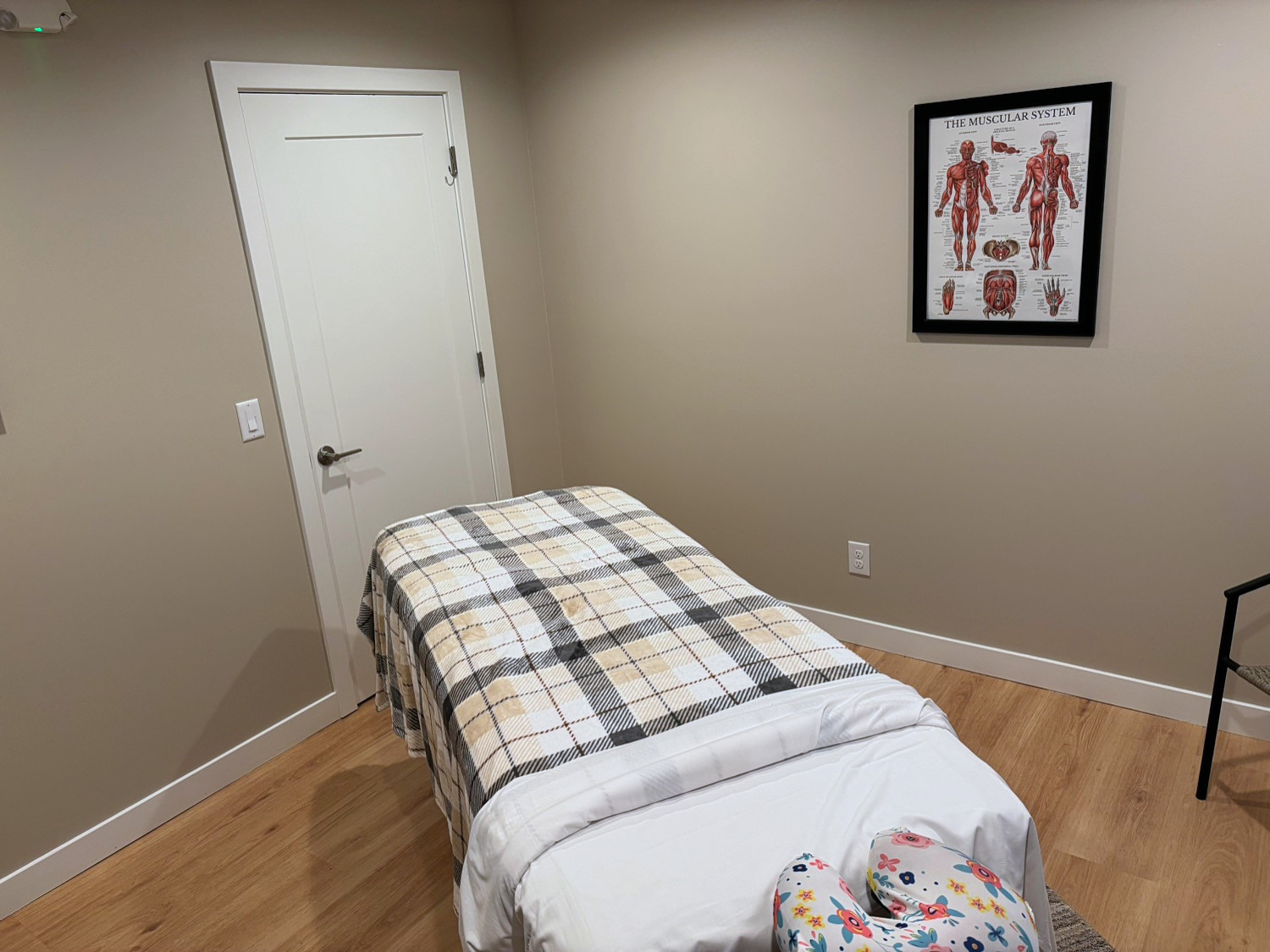
Massage can be a helpful part of care for many people with back spasms and muscle knots. Massage therapy may ease muscle tension, improve comfort, and make it easier to move and stay active. Our office offers deep tissue massage sessions of 60 to 90 minutes, and your plan can include massage, adjustments, or both.
Deep tissue vs. therapeutic massage for knots
Deep tissue massage uses slower, firmer pressure to reach deeper layers of muscle, which many people find helpful for stubborn knots. Therapeutic massage is a broader term for massage aimed at a specific problem, such as back pain or tight muscles. Trigger point work, which focuses steady pressure on individual knots, is often part of both. Pressure should always stay at a level you're comfortable with.
How often should you get a massage for back pain or knots?
It depends on how long the problem has been there and how your body responds. Some people come more often at first and then space visits out as things improve. Your plan will be built around your goals, not a set number of visits.
Chiropractic Adjustments for Back Spasms
When a joint in the spine isn't moving well, the muscles around it can tighten to guard it. Chiropractic adjustments are controlled, hands-on movements that aim to restore motion to those joints, which may help the surrounding muscles relax. Low-force options are available, and the doctors always explain what they plan to do first. If your spasms come with a disc problem or nerve pain down the leg, spinal decompression may also be discussed; see our sciatica guide and pinched nerve guide.
Chiropractor for Back Spasms in Kalamazoo and Portage
Looking for a chiropractor or massage for back spasms near you? Soldano Family Chiropractic Center is at 1324 S Park St, Kalamazoo, MI 49001, a short drive from Portage (see our Portage chiropractor page). Chiropractic care and massage therapy are under one roof, so your care can be coordinated in one place.
Frequently Asked Questions About Back Spasms
What causes back spasms?
Most back spasms come from strained or overworked muscles, or from muscles tightening to protect an irritated joint or disc. Lifting, twisting, long hours of sitting, poor posture, stress, and overuse are common triggers.
How do you stop a back spasm fast?
Rest briefly in a comfortable position, use ice or heat for 15 to 20 minutes, breathe slowly, and start moving gently as soon as you can. If spasms keep coming back, an exam can help find out why.
Can a chiropractor help back spasms?
For many people, yes. Dr. Garrett Soldano D.C. and Dr. Tiffany Newcastle D.C. look for what is irritating the muscles, such as stiff joints or posture, and may use gentle adjustments along with massage therapy and home care.
Is massage good for back spasms and muscle knots?
Massage can help many people by easing muscle tension and tender knots and improving comfort. It often works well alongside chiropractic adjustments.
How long do back spasms last?
Many back spasms ease within a few days, with soreness settling over the following week or two. Spasms that keep returning may point to an underlying issue worth having examined.
Get Back Spasm Relief in Kalamazoo and Portage
You don't have to keep bracing for the next spasm. Dr. Garrett Soldano D.C. and Dr. Tiffany Newcastle D.C. at Soldano Family Chiropractic Center can help you find what's behind your back spasms and muscle knots and build a plan with chiropractic adjustments and massage therapy. We serve Kalamazoo, Portage, and the surrounding area.
Request an appointment or call us at 269-888-2080. We'll answer your questions and let you know whether our care is a good fit.
Disclaimer: This article is for general educational purposes only and is not a substitute for professional medical advice, diagnosis, or treatment. Results vary from person to person. If you have concerning symptoms, contact your healthcare provider.